In December, the Holsteiner Verband hosted a special evening: an interactive information session on modern reproductive techniques, followed by a panel discussion, took place in the foyer of the Fritz-Thiedemann-Halle and online via a live stream on the association’s website.
“It is important to us at the Holsteiner Verband to provide our breeders and all interested parties with as comprehensive information as possible about these methods, so that breeders can then decide for themselves which path they will take with their mares in future,” said Managing Director Norbert Boley before the event began. And the fact that the participants’ thirst for knowledge, interest and, in some cases, uncertainty were considerable became evident time and again throughout the evening: the available seats – which were severely limited due to the coronavirus situation – were fully occupied, and around 400 participants had joined online. The lecture evening was made particularly interactive by the fact that online viewers could also ask questions via a chat function, which the presenter, Christoph Rowold, selected and passed on. The speakers were Jannie Spanner from VetEmbryo in Denmark, Michaela Kölling from Vet Art in Dägeling and Dr Christiane Müller (FN Animal Welfare Officer). The following guests accepted the invitation to the panel discussion: Neel Schoof (Deputy Breeding Manager of the Trakehner Association), Henrik Klatte (Klatte Stud), Prof. Dr Dr hc mult. Ernst Kalm (former professor and head of the Institute of Animal Breeding at the Faculty of Agricultural and Food Sciences in Kiel) and Olaf Rörden (Hof am Sylvert) accepted the invitation to the panel discussion.
How do these techniques work?
Embryo transfer
Embryo transfer is already a fairly widespread method: a few days after a donor mare has been inseminated, the embryo is flushed out and transferred to a surrogate mare, which carries the pregnancy to term and rears the foal. Michaela Kölling from VetArt in Dägeling was on hand as an expert in this technique. “In this way, sport mares can still produce foals, mares with excellent breeding potential can have several offspring per year, and the generation interval can be shortened by using two-year-old mares,” she emphasised. Furthermore, it allows for the breeding use of valuable mares that should not be expected to carry a foal (for example, due to injuries). Of course, there are also disadvantages to carrying out an embryo transfer: “The hormonal impact on the donor and surrogate mares may be greater than with OPU and ICSI, because the cycles of the two mares must be synchronised,” explained Kölling. It is therefore important to be aware that embryo transfer is only possible during the period (approximately March to October) when the mares are in oestrus. In her experience, a drop in the donor mare’s performance (in sport) is more of a fear held by some riders and owners and tends to occur rather rarely. The embryo recovery rate – that is, the chances of success with this procedure – lies between 40 and 60 per cent; however, this varies greatly from case to case and depends on many factors (the mares’ age, state of health, semen quality, etc.). Once an embryo has been retrieved, the implantation rate in the surrogate mare is between 70 and 80 per cent. An important factor in deciding for or against an embryo transfer is the cost. Including the hire of a surrogate mare, the cost is around 4,500 euros; if using your own surrogate mare, the cost is around 1,100 euros, provided that only one flushing procedure is carried out. “Embryo transfer has its limitations,” emphasised Michaela Kölling. “However, in cases of cervical injuries (Editor’s note: affecting the uterus), chronic uterine inflammation, blocked fallopian tubes or even reduced sperm quality, success could still be achieved through oocyte retrieval.”
Oocyte Pick-Up (OPU) and Intracytoplasmic Sperm Injection (ICSI)
The OPU and ICSI techniques are carried out consecutively: in OPU, eggs are first retrieved directly from the follicles on the ovaries via transvaginal puncture under ultrasound guidance. This procedure takes approximately 60 minutes. The aim is to aspirate the follicular fluid containing the egg. The eggs retrieved in this way are identified under a microscope in accordance with strict hygiene regulations, washed and then allowed to mature in an incubator. Once the egg is ready for fertilisation, a single sperm is injected directly into the egg using the ICSI procedure and a very fine needle. The fertilised egg then matures for a few more days in the incubator before the resulting embryo can be transferred to a recipient mare or frozen for transport or storage. These methods enable the use in breeding of sport mares or other mares with very high genetic potential who cannot otherwise be used for breeding, as well as of stallions of whom there are only (still) a few sperm cells available. This is because a 0.5-millilitre paillette of TG semen, which is usually used for one mare, can thus be used for 8 ICSI sessions, each involving up to 10 oocytes, i.e. for a total of up to 80 ICSI cycles. This technique is therefore also of interest for sires who have already passed away, enabling the targeted use of existing semen doses. Jannie Spanner from VetEmbryo in Denmark spoke about the techniques that have been a key part of her daily work for years: “It is a minimally invasive method that causes the mares hardly any pain. They are sedated for the procedure and can return to competitive action after just a few days’ recovery.” According to Spanner, around 15 per cent of the fertilised eggs develop into an embryo, although several eggs are always retrieved and fertilised. Around 70 per cent of the transferred embryos result in a pregnancy. The success rate is significantly higher in younger mares than in older ones: mares aged nine or younger have an 80 per cent chance of becoming pregnant through OPU/ICSI. The overall probability of obtaining one or more embryos in an OPU session averages 56 per cent. With this method, too, a wide range of factors (sperm quality, number of follicles, egg quality, etc.) influence the chances of success. So-called ‘sexing’ – that is, determining the sex of an embryo – is a recurring topic of debate in public discourse regarding its ethical acceptability. According to Spanner, whilst this is theoretically possible, none of her clients have requested it to date. The cost of one OPU/ICSI cycle amounts to around 2,200 euros, provided the procedure is successful and the recipient mare is privately owned.
Views from the field
Henrik Klatte of the Klatte stud farm in Lastrup, whilst not fundamentally opposed to the use of OPU/ICSI procedures, nevertheless voiced criticism: “I regard the current international trend as dangerous for stallion owners and breeders. A large number of ICSI embryos from just a few different sires and a limited number of mare lines are being brought onto the market, which could lead to a loss of genetic diversity.” In his view, this practice often focuses solely on the genetics of two horses rather than on the horses themselves.
Dr Christiane Müller, the FN’s animal welfare officer, explained that the legal framework in Germany differs from that in, for example, the Netherlands or Belgium, where these techniques are already standard practice. This is because, under German animal welfare law, no animal may be required to do anything it is physically incapable of doing. Embryo transfer is recognised as a minimally invasive procedure, whereas the OPU/ICSI procedure is significantly more invasive. She therefore appealed to breeders to also consider the ethical aspects of their decisions: “According to the Animal Welfare Act, commercial purposes must never be the reason for choosing these techniques. There must always be a reasonable justification.” According to Professor Ernst Kalm, one such reason could be, for example, breeding progress within a population.
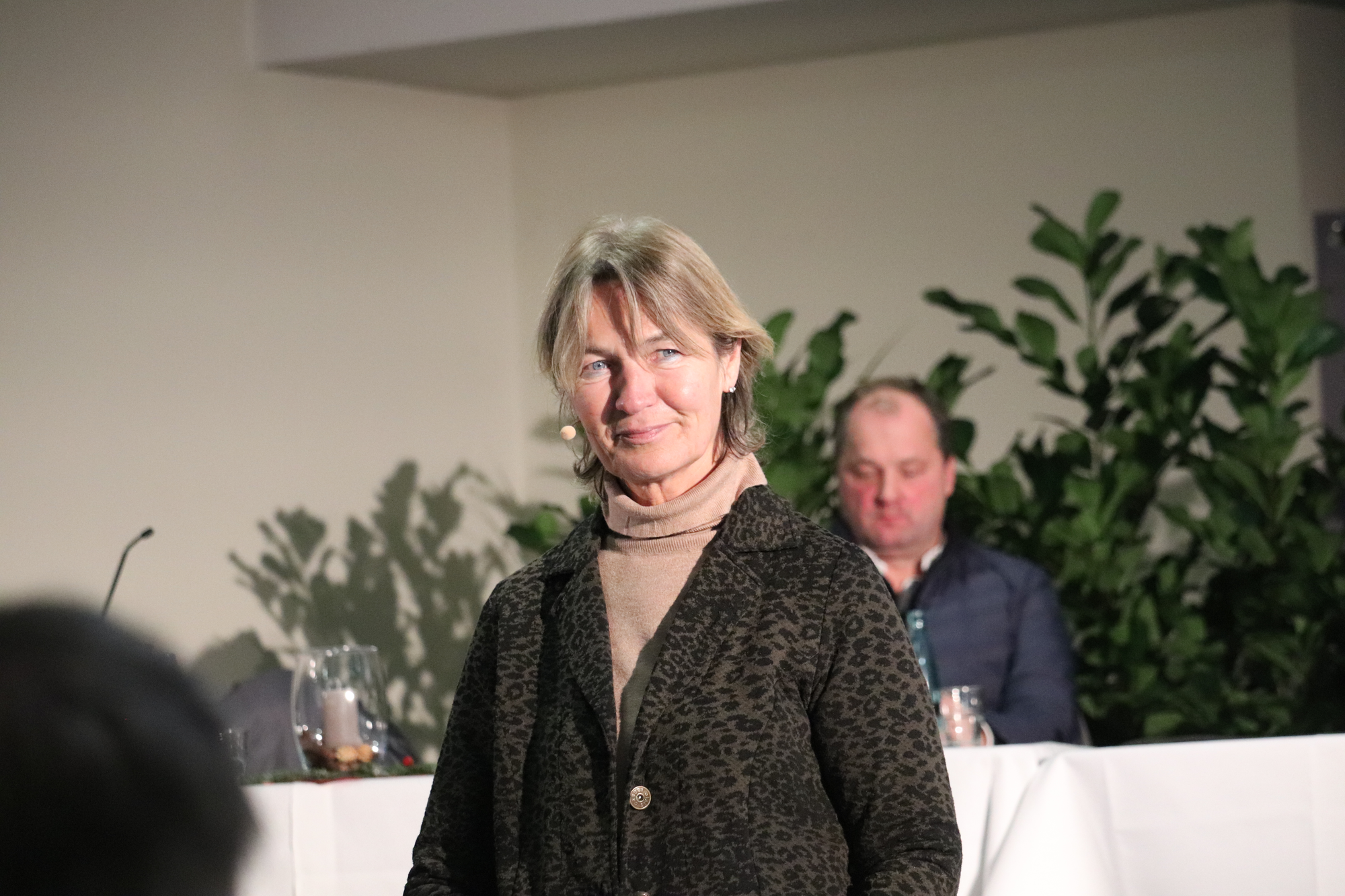
Olaf Rörden from the island of Föhr is a cattle and Holsteiner horse breeder. He has already had positive experiences with embryo transfer, but also emphasises that the offspring must be marketed in a way that justifies the costs. “The foals must either have a high emotional value for their breeders, or be sold for at least 15,000 euros when all costs are taken into account.”
Neel-Heinrich Schoof is deputy breeding director of the Trakehner Association and comes from a family of Holsteiner breeders. He stresses that it is important for breeders not to expect miracles from these techniques: “The mare used must be good enough – otherwise, even with the best technology, no Olympic champion will emerge.” In his view, the technique should be used sparingly, reserved for mares with exceptional genetics and sporting performance.
Taking the findings back to the licensing districts
Before and after the information session, there was an opportunity to take part in an online survey. Breeders and interested parties could indicate whether they would use embryo transfer and OPU/ICSI in their breeding programmes. 57 per cent were already in favour of embryo transfer beforehand, 26 per cent were against it and 17 per cent were unsure. The survey results remained similar in this regard even after the event. 25 per cent of participants wanted to use, or had already used, OPU/ICSI before the event took place, 38 per cent were against it and 37 per cent were unsure. The audience’s uncertainty had decreased significantly following the information evening: only 24 per cent were still unsure whether they would opt for or against OPU/ICSI. 26 per cent would use the methods, whilst 50 per cent had decided against them. Managing Director Norbert Boley was delighted with the keen interest shown in the event. “We will take these insights back to the licensing districts and continue discussions in order to decide how we will handle the semen of our stallions that require special treatment in future.”
The recording will be available on 19 December on Clipmyhorse.TV and subsequently on the Holsteiner Verband’s YouTube channel.