
Casall – a living legend. The association-approved stallion, bred by Wilfried Thomann (Drelsdorf), turns 25 this week. On 13 April 1999, the son of Caretino-Lavall I (line 890) was born and was destined to make history both as a sire and in sport. Holsteiner Verband Hengsthaltungs GmbH has organised a themed week in his honour, which will be featured on the Holsteiner Verband’s channels this week. It begins with Part 1 of his life story.
As a foal, Fiete Mehrens and Detlef Reimer discovered Hennings Casall in the district of North Frisia. During a mare registration in Behrendorf, Thomann struck up a conversation with Fiete Mehrens. The two discussed the foals that had been born at Wilfried Thomann’s stud. Among them was a colt by Caretino out of the mare Kira by Lavall I, from the famous line 890 and, at the same time, the direct dam line of the licensed stallions Cesano I and II, as well as numerous international sport horses such as Crocodile Dandy (Alison Firestone) and Conally (Markus Renzel). “Is the stable far from here?” Fiete Mehrens asked the breeder. Fifteen minutes later, the two of them were standing in the stable at Joldelund with Kira and her five-day-old foal. “We finalised the sale that very same day,” recalls Wilfried Thomann of the day he sold Casall to the Hennings & Mehrens co-ownership group. Two years passed – and the young stallion was shortlisted for the 2001 Holsteiner licensing.
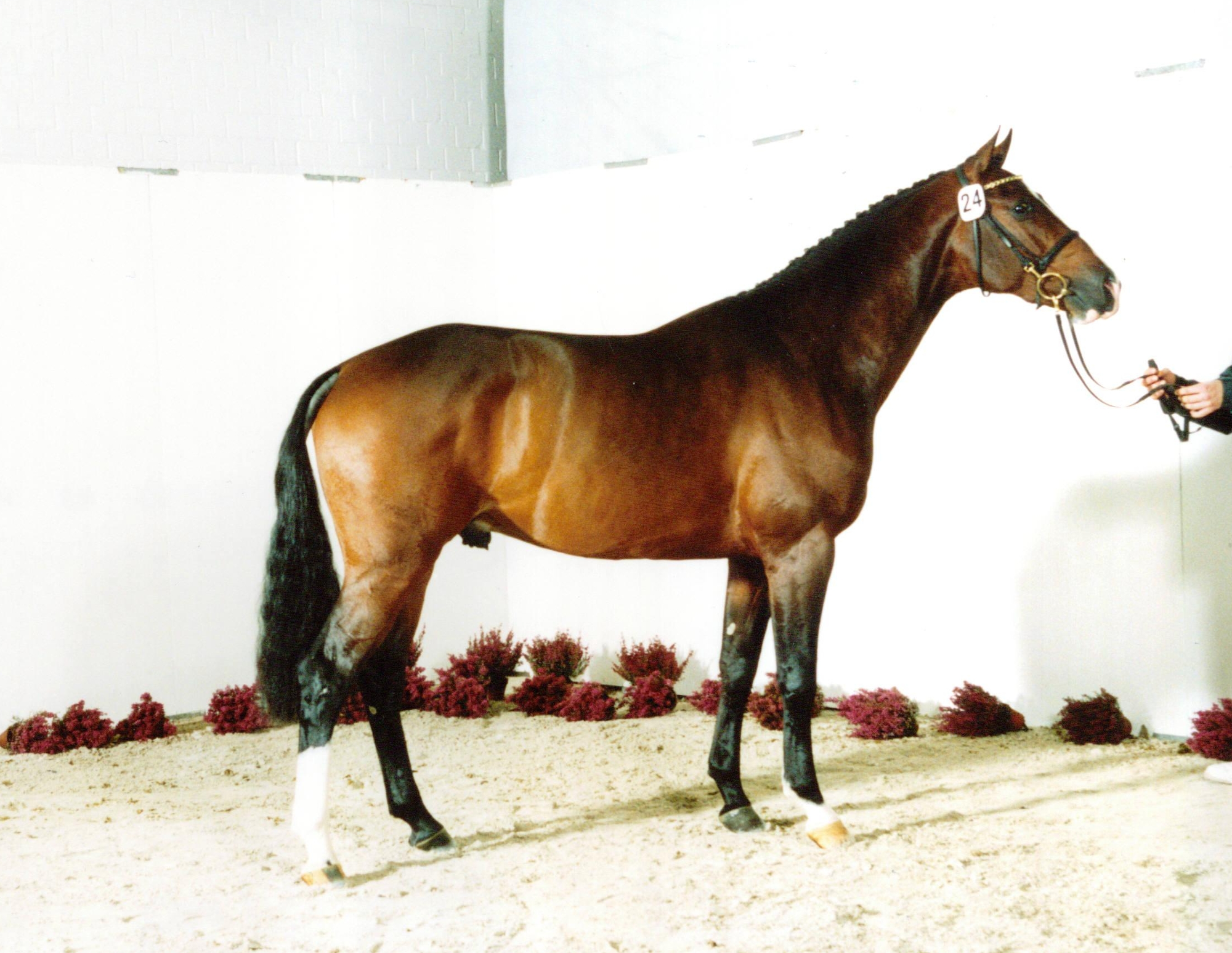
Casall at his licensing
But was he just an expensive gelding?
Norbert Boley first took notice of the young Casall during the initial free-jumping test. “I’d already done a lot of good business with Reimer Hennings Sr. before. So I asked Fiete Mehrens and Reimer Hennings if they’d be willing to sell the two-year-old stallion to the association,” recalls Norbert Boley, who was managing the affairs of Holsteiner Verband Hengsthaltungs GmbH at the time. The owners replied “yes”, on condition that an agreement could be reached on the price. And as this was no small sum for a two-and-a-half-year-old, Norbert Boley sought the opinion of his then board members, Breido Graf zu Rantzau and Hans-Werner Ritters, before making a decision. When Casall managed to win over these two experienced horse connoisseurs as well, he became the property of the Holsteiner Verband.
“At the licensing, everything went well at first. The horse presented himself very well in hand and lived up to the expectations placed on him,” says Norbert Boley. But then came the day of the free jumping in Neumünster. “In the end, he actually only made a single jump there that matched his quality. And I secretly feared that he might just be an expensive gelding after all,” Boley continues. “Fortunately, the licensing committee hadn’t forgotten his convincing performances in the preliminary selections. The licensing verdict was therefore positive. So Casall had cleared this first major hurdle.
This was followed by a ‘quite good stallion performance test’, before things were really set to take off for him at the age of five. But then the stallion caused quite a headache for those in charge at the Holsteiner Verband, led of course by Norbert Boley: “He had a very good rider in Gunnar Röer. Nevertheless, he didn’t develop in the way we’d all hoped.” After some time, the question arose: What are we to do with this stallion, in whom we’d all placed such high hopes?
And then Bengtsson came along...
...tomorrow we’ll continue with Part 2 of the life story of a world-class horse.
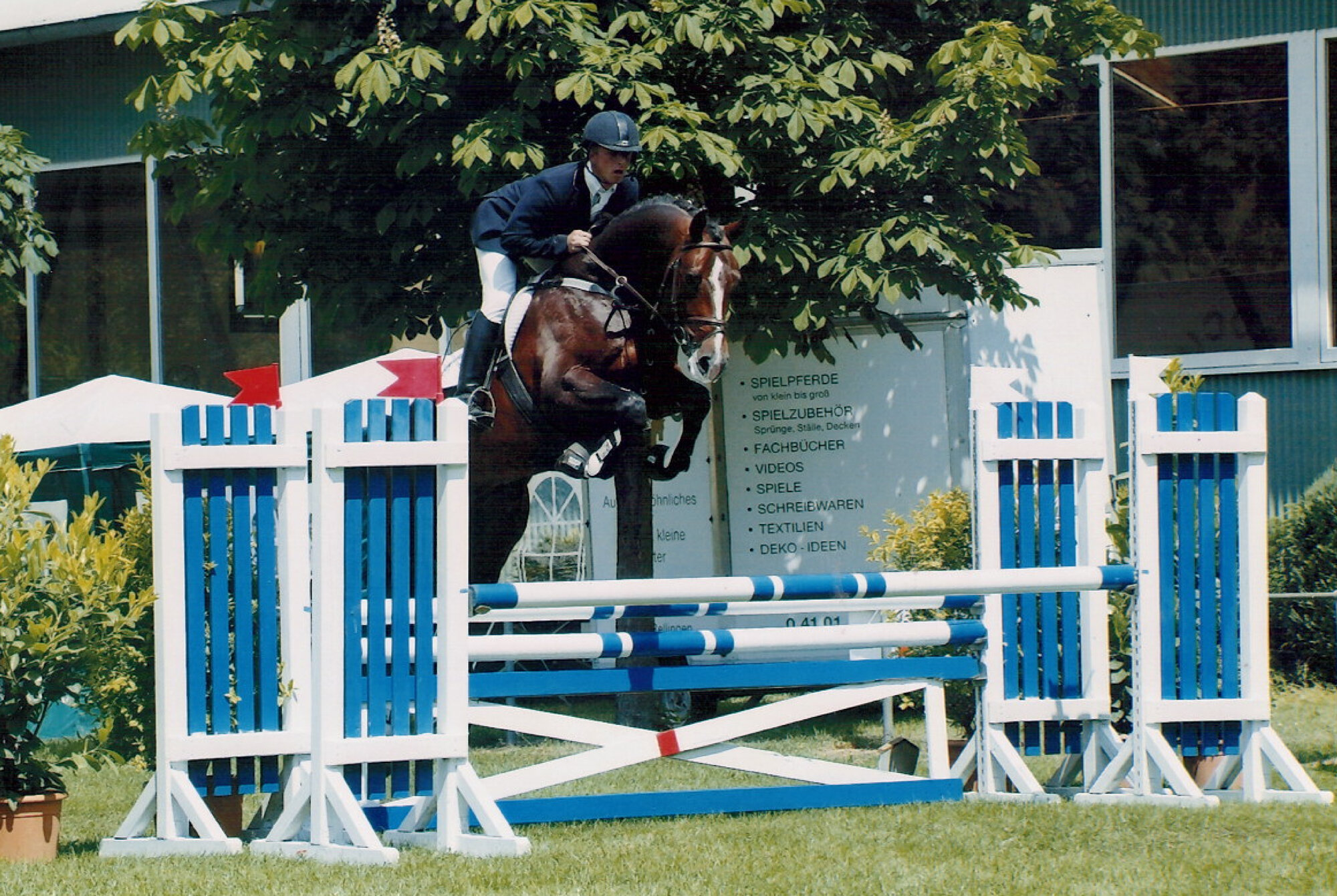
Casall and Gunnar Röer in 2004
More about the stallion:
Photos: Bugtrup, Putfarcken


